
At Dallington School, we believe learning is not simply about acquiring knowledge, but about making connections, asking questions and applying what we know to the real world. That is why, following the British curriculum, we embrace a topic-based, project-led approach that enables our pupils to explore a single theme through different subjects and perspectives.
Knowledge does not exist in separate compartments. Mathematics, art, science, history and English are not isolated worlds. In everyday life, these areas of knowledge constantly overlap. Why should school be any different?
From art to mathematics: learning through connections
Imagine a class of five- or six-year-olds in Key Stage 1 (KS1) working on our Art Topic.
Through artists such as Joan Miró, Pablo Picasso, Frida Kahlo and Bofin, our pupils discover different ways of observing, interpreting and representing the world.
They investigate who these artists were, explore their work, discover their techniques and consider what they wanted to express. They then draw inspiration from them to create their own compositions, experiment with materials and develop their creativity.
But the learning does not end in the art classroom.
The same project becomes a thread running through other subjects:
- In English, pupils broaden their vocabulary, describe works of art, express emotions, share interpretations and learn to explain their own creations.
- In mathematics, they explore the geometric shapes, patterns, symmetry, proportions and spatial relationships found in artworks.
- In science, they investigate colours, light, materials and some of their properties.
- In Humanities, they explore the artists’ countries, cultures and historical contexts, understanding how our surroundings influence the way we see the world.
In this way, a project that begins with a painting can become an opportunity to develop language, mathematical thinking, scientific curiosity, cultural awareness and personal expression.
Pupils do not simply learn about art. They learn to make connections, ask questions and develop their own understanding of the world.
From age five to fifteen: the same philosophy, new challenges
This approach to education does not disappear as pupils grow older. It evolves with them.
What begins in Early Years and Primary with projects that spark curiosity and connect different areas of knowledge develops in Secondary into increasingly complex, independent challenges rooted in real-life situations.
One example can be found in our Business lessons.
Our 15-year-old students are set a challenge: to work as a team to develop a product from scratch, as though they were starting their own company.
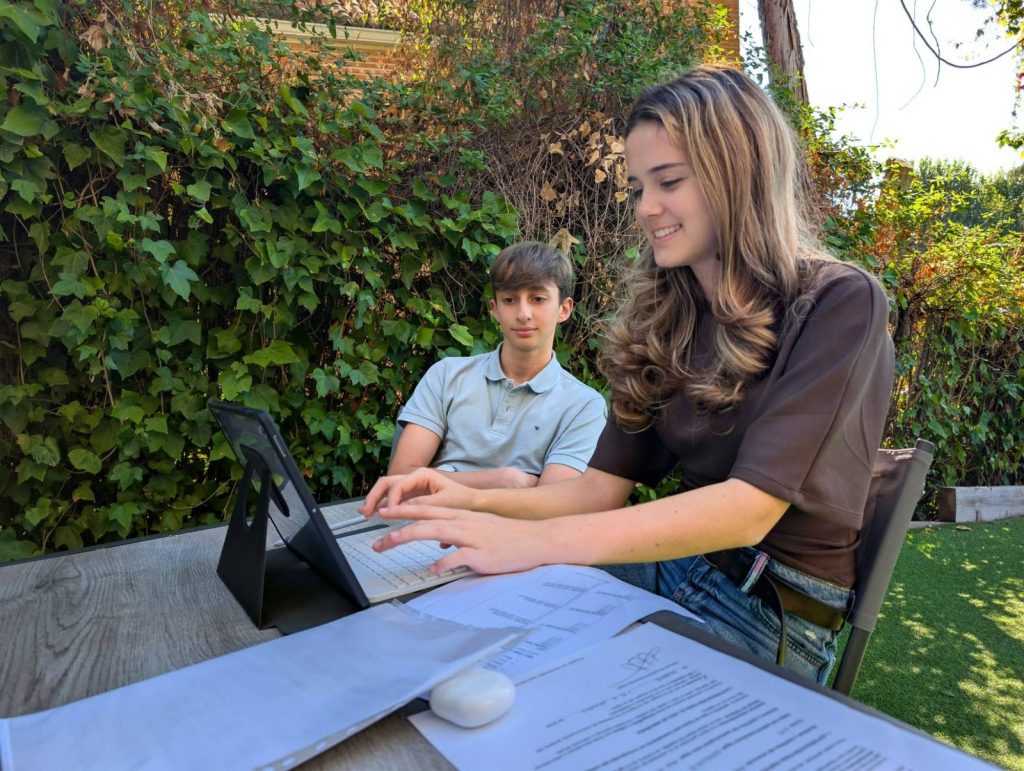
It is not simply a matter of coming up with a good idea. They must turn it into a viable business proposal.
To do so, they research the market, identify potential customers, analyse competitors, calculate production costs, estimate potential profits and devise a marketing strategy.
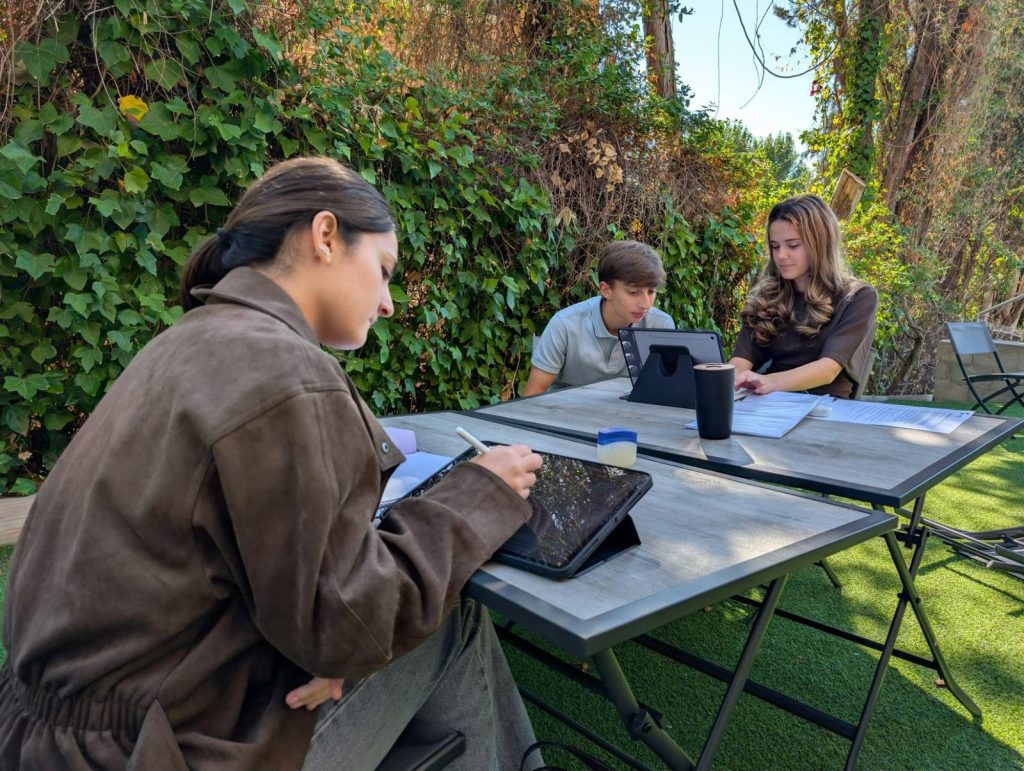
They need mathematical knowledge to prepare budgets and assess profitability; communication skills to present and defend their proposal; creativity to develop the product; and critical thinking to evaluate their decisions.
The project culminates in a particularly meaningful challenge: pitching their idea to a panel of potential investors made up of school parents, who listen to their proposals and ask questions, just as they would in a real business setting.
Suddenly, what they have learnt in class takes on a completely different meaning.
They are no longer studying costs and profits simply to answer an exam question correctly. They need to understand them because the viability of their project depends on it.
They are no longer preparing a presentation simply to earn a mark. They must persuade an audience, justify their decisions, answer questions and defend their ideas with confidence.
Learning is no longer something they simply receive; it becomes something they build, apply and make their own.
Putting pupils at the heart of their learning
At Dallington, we believe one of education’s greatest challenges is to help pupils move from being passive recipients of information to becoming active participants in their own learning.
When a child researches an artist and decides how to interpret their work, they are learning to think independently.
When a teenager assesses whether a business idea is viable and has to defend it in front of a group of adults, they are developing independence, responsibility, analytical skills and confidence in their own judgement.
In both cases, they are learning something that goes far beyond any single subject: how to use knowledge as a tool to understand and engage with the world.
This is one of the great strengths of project-based learning: it allows us to teach the British curriculum rigorously while connecting its content to experiences that give it meaning.
It is not a choice between acquiring knowledge and developing skills. The two must go hand in hand.
Learning for life, not just for exams
At Dallington School, we see educational success as something far broader than achieving good academic results.
Knowledge is, of course, essential. But so is the ability to use it, question it, connect it and apply it in new contexts.
Whether we are talking about a five-year-old discovering Miró’s world or a 15-year-old presenting their first business idea to potential investors, the aim is the same.
In both cases, we want to spark curiosity, encourage independence and develop the ability to think for oneself.
Education is not simply about teaching our pupils the answers. It is also about giving them the tools, confidence and intellectual freedom to ask their own questions, develop their arguments and find their own answers.
For us, that is one of the most important differences between studying and truly learning.
