
Which books in English could your child read during the holidays? Whether they are just beginning to read or already enjoy novels, summer is a wonderful opportunity to discover new stories and keep using the language.
The key is to choose books that suit their reading ability and, above all, their interests. A book that sparks curiosity will always be a better choice than one read out of obligation.
At Dallington School, we have put together a selection of books in English for different age groups, from early readers to teenagers.
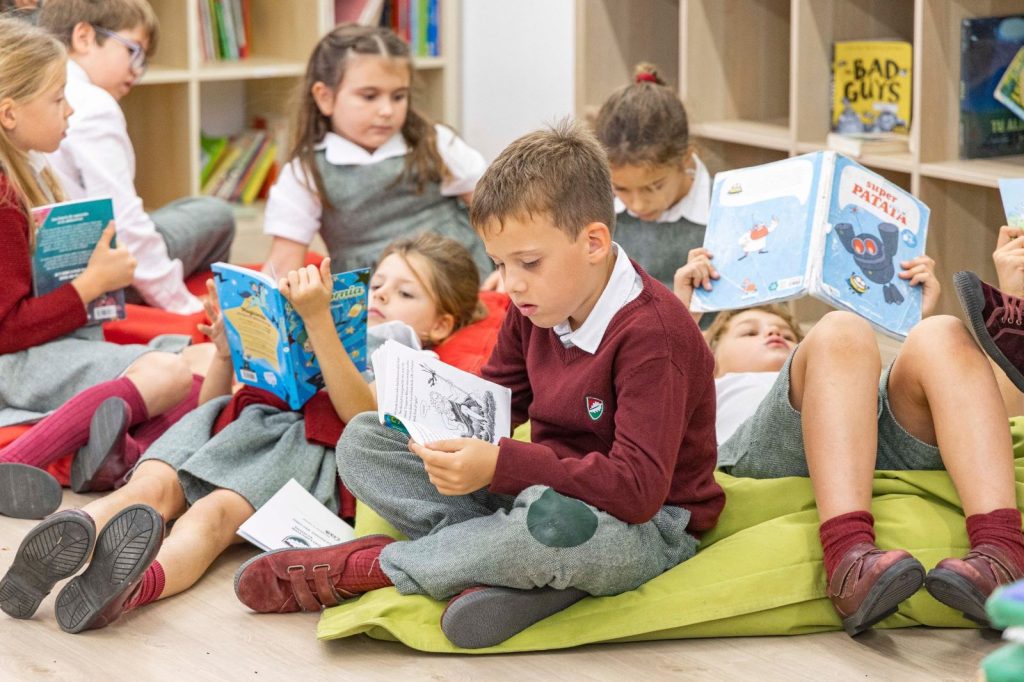
Which books in English do we recommend for children aged 5 to 7?
At this age, picture books, rhymes and stories with repetitive patterns help children develop comprehension and confidence in reading.
The Gruffalo – Julia Donaldson
A story full of humour, rhyme and unforgettable characters. Its repetitive language helps children anticipate words and enjoy reading aloud.
We’re Going on a Bear Hunt – Michael Rosen
A perfect adventure to read as a family. Its rhythm and repetition invite children to join in with the story.
The Cat in the Hat – Dr. Seuss
A fun read that plays with English sounds and rhymes. Particularly suitable for children who are beginning to read independently.
Our tip: at this age, reading together for ten minutes can be more beneficial than trying to finish an entire book. There is no need to translate every word: illustrations and context also help children understand the story.
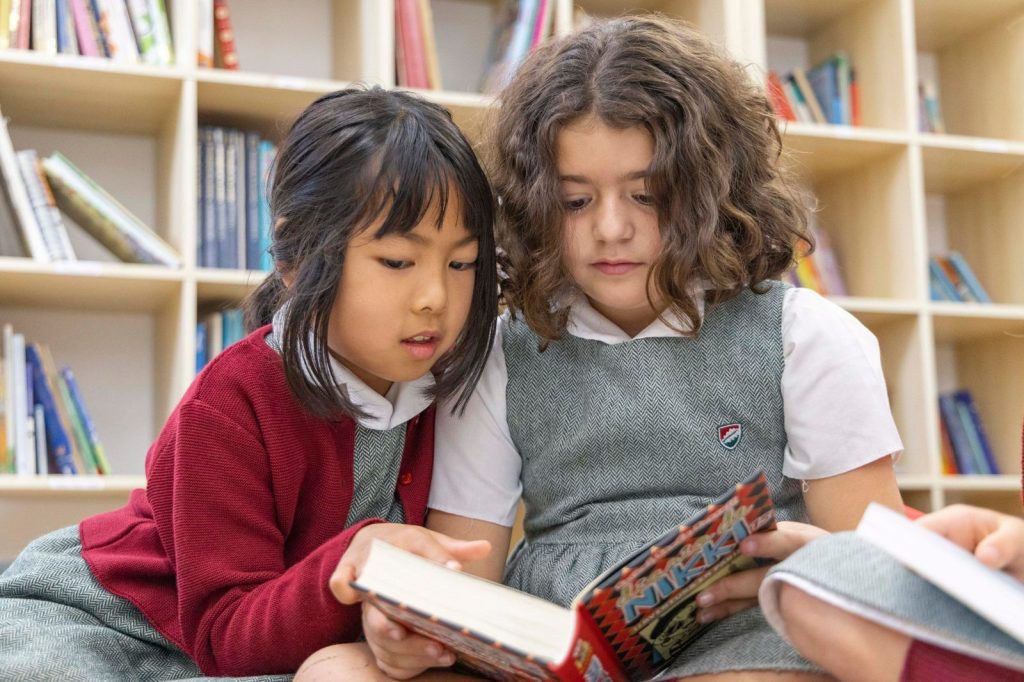
Which books in English can children aged 8 to 10 read?
At this stage, many children begin to enjoy their first novels and book series. Series are particularly useful because they help readers become familiar with characters and writing styles.
Magic Tree House – Mary Pope Osborne
Jack and Annie travel to different times and places through a magical tree house. A series that combines adventure, history and discovery.
Fantastic Mr Fox – Roald Dahl
A short, clever story full of Roald Dahl’s characteristic humour. An excellent introduction to his novels.
Matilda – Roald Dahl
One of the British author’s best-known books, featuring an extraordinary girl who discovers the power of books and learning.
Diary of a Wimpy Kid – Jeff Kinney
Its combination of text, illustrations and everyday humour makes it a good choice for children who are not yet drawn to traditional novels.
Our tip: if your child finds a series they love, let them read several books in a row. Becoming familiar with the vocabulary and characters can help build fluency.
Which books in English do we recommend for students aged 11 to 13?
During the first years of Secondary School, students can begin exploring more complex stories, with characters who introduce new dilemmas and perspectives.
Wonder – R. J. Palacio
A novel about empathy, friendship and accepting differences. Its themes connect particularly well with values we promote at Dallington, such as Kindness and Respect.
Percy Jackson and the Lightning Thief – Rick Riordan
Adventure, Greek mythology and plenty of humour in a story that often captivates readers who enjoy fantasy.
Harry Potter and the Philosopher’s Stone – J. K. Rowling
The beginning of one of the most popular series in children’s and young adult literature, with a world that encourages readers to keep turning the pages.
Holes – Louis Sachar
An original novel combining mystery, humour and adventure, with a plot that invites readers to make connections and discover how the different stories fit together.
Our tip: at this age, it is important to let young people have a say in choosing their books. Fantasy, humour, mystery and graphic novels can all be excellent gateways into reading.
And what about teenagers aged 14 to 16?
Students in Key Stage 4 can enjoy novels with greater narrative depth and themes that encourage reflection.
Animal Farm – George Orwell
A short allegorical novel that encourages reflection on power, society and the manipulation of language.
The Curious Incident of the Dog in the Night-Time – Mark Haddon
A story told from a distinctive perspective, combining mystery, humour and a very particular way of seeing the world.
The Hunger Games – Suzanne Collins
A fast-paced novel that raises questions about society, power and individual choices.
These books may be particularly appealing to students who already have a good level of reading comprehension in English. Choices should always reflect their maturity and preferences.
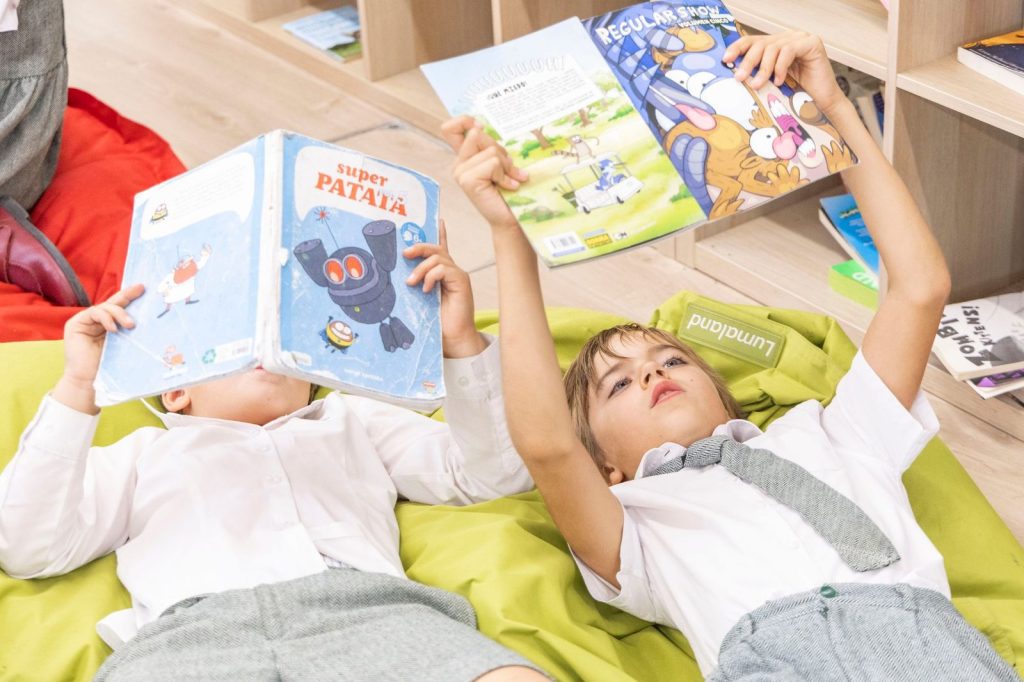
What if your child is not yet confident reading in English?
Not all children of the same age have the same reading ability, and that is completely normal.
If a book feels too difficult, it is better to choose something more accessible than to turn reading into a source of frustration.
Alternatives include comics, graphic novels, graded readers and audiobooks accompanied by the written text.
A useful rule of thumb: if your child constantly has to stop to look up words and loses track of the story, it may be better to start with an easier book.
How much time should children spend reading in English during the summer?
There is no single number of minutes that works for every child.
As a starting point, setting aside 10 to 20 minutes a day can help establish a routine, provided the reading is age-appropriate and enjoyable.
It is also perfectly fine to alternate between books in English and Spanish, listen to audiobooks or reread favourite stories.
The aim is not to complete a reading list, but to keep an interest in books alive.
Our Secondary School reading guide
At Dallington School, we want our students to discover the pleasure of reading and develop a positive relationship with books, beyond the set texts they study during the school year.
That is why we have a reading guide in English for Secondary School, organised by Key Stage, bringing together recommendations for different ages and reading levels.
From classics of British literature to contemporary novels, the guide helps each student find stories that match their interests.

Scan the QR code or open the guide here.
Our best advice for summer reading
The best book is not always the most difficult, the longest or the one that appears on a recommended reading list.
It is the one that makes a child want to turn the next page.
At Dallington, we believe that nurturing curiosity and a love of learning is just as important as developing academic skills.
And reading is no different: what matters is not how much children read, but that they want to keep reading.
